


Home / Journal / Interdisciplinary Education and Psychology
Social Emotional Competence as a Predictor of Academic Achievement among Form Three Students in Kericho County, Kenya
Social emotional competence Academic Achievement Secondary school education Kenya
Joy Waronya Bahati, James Ndege Oluoch, Elizabeth Nduku Mutisya
DOI: 10.31532/InterdiscipEducPsychol.5.1.002 10 Apr 2026
Download

Abstract
Academic achievement remains crucial to the personal and career development journey of a student. Nevertheless, poor academic achievement has continuously been evidenced globally, with further statistics showing a similar trend in Kericho County. The study examined the relationship between social emotional competence and academic achievement among Form Three students in Kericho County, Kenya. The study explored how competencies such as self‑management, relationship skills, and responsible decision‑making contribute to academic outcomes. Results revealed a positive and significant association between social emotional competence and students’ academic performance, supporting existing international findings while providing locally relevant evidence. The study highlights the need for integrating social‑emotional learning into secondary education, strengthening teacher training, and expanding assessment frameworks to include social emotional competence indicators. The study recommends broader implementation of social emotional learning programs and further research across diverse contexts and social emotional competence components.
Keywords
Social emotional competence, Academic Achievement, Secondary school education, Kenya
Introduction
For a long time, academic achievement has maintained its status as one of the fundamental measurable educational outcomes. According to Harris (2023), academic achievement, often expressed through grades, is a reflection of a students’ extent of mastery of knowledge, skills, and competencies specified by a curriculum. However, academic achievement encompasses more than just cognitive ability, encompassing a student’s ability to apply the skills, knowledge, and competencies in practical contexts (Peng & Kievit, 2020). As a result, academic achievement has served as a key indicator of educational and personal development. Particularly, academic achievement has been heavily known to influence a student’s future opportunity in the job market and higher education (Thies, 2023). Further, high academic achievement contributes to innovativeness from the skilled individuals, hence yielding positive economic growth.
Nevertheless, students continue to grapple with poor academic achievement globally. Reports by Finning et al. (2019) emphasizes the rising global concerns of poor academic achievement among the adolescents in middle and high schools. On average, over 60% of students in high schools globally have reportedly attained wastage grades, failing to attain the minimum cutoff points required to proceed to tertiary institutions. Some factors that have been related with the poor academic achievement among high school students include drug abuse and absent parenting (Park & Lee, 2020), which invite the question on whether social emotional competence may help alleviate the situation.
Further evidence on the worrying trend in the students’ academic achievement lies in the latest National Assessment of Educational Progress (NAEP) results 2024. Particularly, the American high school students posted a significant drop in their overall academic achievement with significant disparity between the skills between best-performing and worst-performing students (National Center for Education Statistics [NCES], 2024). While the impact of the COVID-19 still took the centerstage in the conversation of possible factors impacting students’ performance, more research has sought to enunciate the role of social emotional competence on the students’ academic achievement.
A similar trend has been witnessed in the Asian continent. For instance, an exposition by the Chinese National Bureau of Statistics revealed an alarming amount of wastage grade achieved by millions of children. Further statistics revealed the struggle students had in improving their academic achievement in secondary and tertiary institutions (Ge & Wang, 2019). Similarly, poor academic achievement has been Indonesia have been a problem plaguing Indonesia for decades (Sukmayadi & Yahya, 2020). Notably, poor quality of school facilities and teacher absenteeism have been cited as factors aggravating the situation. However, the problem has recently called for the attention of psychological factors such as social emotional competence which have been cited to determine academic achievement.
In the African context, poor performance has been witnessed in the recent years despite huge wins with more children are attending school than ever before (Vadivel et al., 2023). Studies have indicated that most students still grapple with basic literacy and numeracy skills—for instance, in South, many students have constantly been unable to maintain grades needed to stay in school (Robertson & Graven, 2020). Similarly, only about 14% of East Africans aged 15–29 meet the academic requirements for upper secondary or tertiary education, signaling that academic achievement remains worryingly poor (Amutuhaire, 2024).
According to Pederson (2025), Kenya mirrors these concerns, with more than half of candidates each year score a D+ or below, limiting their chances of progressing to higher education or securing meaningful employment. Academic trends from the past five years consistently show that the majority of students fall into the lowest grade categories. Narrowing down to Kericho County, data illustrate that about 75% of KCSE candidates in the county scored a D or below over five consecutive years, with Bureti Sub‑County performing worse than other local regions (Bii & Nzevu, 2024). While socioeconomic factors and dropout rates contribute to the problem, existing studies offer limited explanations or solutions, leading to the question on whether social emotional competence can explain the poor academic performance, especially in Kericho County, Kenya.
Social Emotional Competence While education systems have long emphasized cognitive skills, there is growing recognition that social and emotional abilities are just as crucial for learning. According to Gimbert et al. (2023), social emotional competence includes skills such as managing emotions, building healthy relationships, showing empathy, and making responsible decisions. Although grades remain an important measure of academic performance, they don’t capture the full picture—students also need motivation, resilience, and emotional regulation to stay focused and overcome setbacks. Notably, the aforementioned abilities aid students handle the everyday challenges of school, from coping with stress to working well with classmates (Varshini et al., 2025).
Research shows that learners with higher social emotional competence tend to participate more in class, behave better, and form positive peer relationships—all of which support better academic outcomes (Yang et al., 2023). According to Naseem et al. (2024), social emotional competences influence significantly influence academic performance among students. Further, social emotional competencies go beyond class performance in school determining long‑term success of students, including mental health and career readiness (Cavioni et al., 2024).
Despite growing evidence, questions remain about how well social emotional competences predicts academic success compared to traditional cognitive measures. As classrooms become more diverse and demanding, integrating social‑emotional learning into education is increasingly seen as essential for preparing students to thrive academically and in life. Generally, most studies agree with the proposition that social emotional competence is significantly related with students’ academic achievement (Sánchez-Álvarez et al., 2020).
In a study by Panayiotou et al. (2019), the relationship between social emotional competence and academic achievement among English elementary school students was explored. Findings from structural equation modeling indicated that social emotional competence impacted academic achievement positively. However, these findings are specific to the English elementary school context who differ from high school students in line with their developmental milestones. As a result, further research on the relationship between the two variables among Form 3 students in Kericho County could help extend the external validity of the findings.
Contrary to the above, Zhang and Peng’s (2023) study unearthed contradictory findings. Their study investigated the longitudinal association between social emotional competence and reading. Using a USA-based kindergarten sample followed to the 5th grade, the study collected data on the students’ social emotional competence using a teacher-reported questionnaire. On the other hand, data on the students’ reading achievement were collected from the students’ scores from reading assessments. The results revealed no significant relationship between the students’ scores in reading assessments and their respective social emotional competence.
In a Nigerian study, Obilor and Sakpege (2022) investigated the relationship between social emotional learning skills and academic performance. The study was conducted using public senior secondary school students in Rivers State, Nigeria. The findings revealed that various components of social emotional learning skills significantly influenced academic achievement. However, a similar study might need to be conducted in Kenya owing to differences in the education background of the two nations.
Closer home, a study by Malhotra et al. (2021) investigated the impact of social emotional learning in several Ugandan schools. The study targeted adolescent girls comparing outcomes with a control group from the same region. Findings indicated improvements in various outcomes, including mental health indicators for the adolescent girls who took part in the social emotional curriculum. While this groundbreaking study shows positive educational outcomes, it fails to account for academic achievement, a core outcome in the academic setup. Further, the study solely focused on adolescent girls limiting the generalizability of its findings, hence the need for the current study.
In Kenya, a related study by Joyner (2021) has looked into the relationship between social and emotional skills and academic performance among Grade 1-3 students. The study was conducted in Kwale County with data on the students’ social and emotional skills collected using teacher-reported scale. The students’ math and reading scores were representative of the students’ academic performance. The findings revealed a significant link between the students’ social and emotional skills and academic performance. However, the findings from elementary school students may not be generalizable to secondary school students, hence the need for a similar study among secondary school students, specifically from Kericho County, Kenya.
In summary, most studies on the relationship between social emotional competence and academic achievement have elucidated on the positive and significant relationship between the two variables. However, most of the studies have done beyond the Kenyan borders, limiting the generalizability of the findings to the Kenyan context. As a result, the current study sought to determine the relationship between social emotional competence and academic achievement among form three students in Kericho County, Kenya.
Conceptual Framework
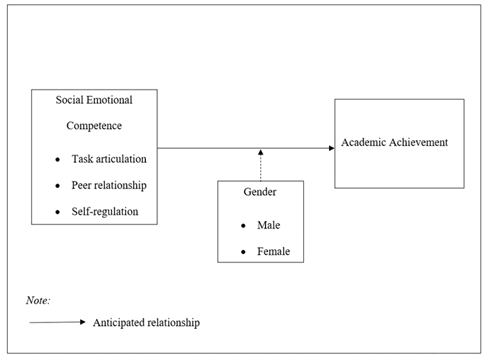
The conceptual framework (figure 1) shows the hypothesized relationship between students' social emotional competence and their academic achievement. It is expected that social emotional competence predicts students’ academic achievement, and gender is assumed to moderate this relationship.
Figure 1. A Framework Showcasing the Anticipated Relationship between Social Emotional Competence and Academic Achievement.
Material and Methods
Design The present study adopted a correlational design, which is crucial in elucidating the relationship between subject variables (Howitt & Cramer, 2020). In this context, the correlational research design was adopted to determine the relationship between social emotional competence and academic achievement.
Research Methodology The current study employed a quantitative approach. Particularly, the quantitative approach entails the systematic collection of numeric data and analysis of the data to identify patterns and test hypothesis of subject variables generalizing the findings to larger populations (Fischer et al., 2023). In this study, the quantitative approach relied on the survey questionnaires filled by students to collect numeric data that would help enunciate the relationship between the study variables.
Participants of the Study The study targeted 3973 form three secondary school students from the 26 public secondary school institutions in Bureti Sub-County, Kericho County. Stratification of the 26 public secondary schools was done to ensure representativeness of the data collected from the sample size. Notably, the strata were classified accord to school type—extra county level secondary schools (6), county level secondary schools (11), and sub-county level secondary schools (9).
Subsequently, simple random sampling was used to arrive at the 9 sampled schools and the study sample size. Yamane’s (1967) formulae was used to arrive at a sample size of 363 students which was later adjusted in line with Johnson and Christensen’s (2019) guidelines. Eventually, a final study size of 453 students, including 227 male students and 226 female students, was used in this study.
Data Collection Instruments Pilot Study: Prior to the actual study, a pilot study was conducted using a sample of 20 students (10 female and 10 male) from a co-educational day school. The pilot study was conducted to clear any ambiguities that students might have identified in the self-report questionnaires issued and the assessment of the instrument’s validity and reliability. Further, the pilot study was essential for the assessment of the suitability of proposed logistical considerations.
Validity of the Research Instrument: Through consultations with educational psychology experts, the researcher assessed and ascertained the content validity of the instrument. Further feedback from peers and the pilot study participants was incorporated to ensure the face validity of the research instrument. Lastly, the Social Emotional Scale had its construct validity ascertained by its developer. Coryn et al. (2009) reported adequate fit indices—χ2/df = 3.12, CFI = .91, GFI = .92, and RMSEA = .06.
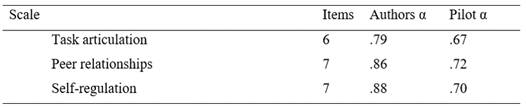
Reliability of the Instrument: The internal consistency of the Social Emotional Scale (SES) was assessed using the Cronbach’s alpha coefficient with a coefficient above .70 ascertaining the reliability of the instrument (Park, 2021). Prior studies have ascertained the reliability of the SES—the developer of the instrument revealed a reliability coefficient α = .79- .86 for the three subscales of the SES (Coryn et al., 2009). In our study, the Cronbach alpha coefficient ranged between .67 and .72, representing marginally acceptable reliability of the adapted instrument. With the SES demonstrating moderate stability, interpretations should be made cautiously, recognizing the potential influence of measurement error (See Table 1).
Table 1. Reliability Coefficients.
Ethical Consideration Prior to conducting the study, the researcher obtained clearance from the Kenyatta University Review Board and the National Commission for Science, Technology and Innovation (NACOSTI)—permit number, NACOSTI/P/25/417443. Further, the researcher obtained permits from the County Director of Education, Kericho County. During the data collection phase of the study, the researcher briefed the researchers the study’s aims and the voluntary nature of the study, while guaranteeing them confidentiality of their responses. Only students who consented to participation were issued with the study questionnaire.
Data Analysis The data collected using questionnaires were coded for analysis into the Statistical Package for Social Sciences (SPSS) software. Prior to the analysis, the data was screened for missing values and outliers. Out of the original 453 questionnaires, 41 were flagged for missing data and excluded from consideration in analysis. Further, nine questionnaires were excluded from the final analysis after being flagged for outliers in either social emotional competence or academic achievement—a boxplot was used to get identify the outliers (Mazarei et al., 2025). As a result, the total valid questionnaires considered during the data analysis process were 403. The total valid questionnaires represented a response rate of 88.96% which was adequate (Lund, 2023). Prior to the data analysis process, the researcher assessed for the presence of common method bias using Harman’s single factor test. The results indicated that the largest factor accounted for 18.12% of the total variance, a figure much lower than the 50% threshold (Howard et al., 2024). These findings suggested that our results were unlikely affected by the common method bias. The researcher proceeded with correlation and regression analysis after the process of data cleaning.
Results
Descriptive Analysis The aim of the current study was to examine the predictive relationship between students’ social emotional competence and their respective academic achievement. Part of the preliminary analyses conducted prior to the linear regression analysis on the two variables included a descriptive analysis of the students’ social emotional competence as depicted in Table 2.
Table 2. Descriptive Statistics of Social Emotional Competence.

Note. N = 403, N- Number of participants, Min – Minimum, Max – Maximum, SD - Standard deviation, Sk - Skewness, Kur – Kurtosis
As shown in Table 2, the lowest perceived social emotional competence score was 35 while the highest was 119—this resulted into a range of 84. The average social emotional competence score was 88.40 (SD = 12.80)—this implied that the students perceived to have had high levels of social emotional competence. Further, a skewness coefficient of -0.57 and a kurtosis coefficient of 0.87 signaled the normality of the social emotional competence scores with the coefficients remaining within the acceptable cutoff values of ±2 and ±7, respectively (Hatem et al., 2022).
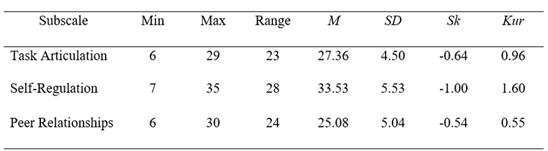
Further, the descriptive analyses were extrapolated to the specific dimensions of the variable social emotional competence with the findings summarized in Table 3.
Table 3. Descriptive Statistics of the Social Emotional Competence Subscales.
Note. N = 403, N- Number of participants, Min – Minimum, Max – Maximum, SD - Standard deviation, Sk - Skewness, Kur – Kurtosis
As depicted in Table 3, the minimum task articulation score was 6 while the highest was 29, with a mean of 27.36 (SD = 4.50). Self-regulation has a minimum score of 7 and a maximum score of 35 with a mean of 33.53 (SD = 5.53). On the other hand, peer relationships reported a minimum score of 6 and a maximum score of 30 with a mean of 25.08 (SD = 5.04). Particularly, the entries of the subscales of social emotional competence were normally distributed as the skewness and kurtosis coefficients falling with the recommended range (Hatem et al., 2022).
Additionally, the descriptive analysis of the students’ academic achievement scores is as shown in Table 4.
Table 4. A Descriptive Analysis of the Students’ Academic Achievement Scores.

Note. N = 403, N- Number of participants, Min – Minimum, Max – Maximum, SD - Standard deviation, Sk - Skewness, Kur – Kurtosis
As shown in Table 4, the academic achievement (raw scores) ranged from 8.71 to 79.98 with a mean of 42.16 (SD = 15.57). The skewness and kurtosis coefficients of the students’ academic achievement scores signaled the normality of the data with the coefficients falling within acceptable range (Hatem et al., 2022).
Hypothesis Testing The aim of the current study was to determine the predictive relationship between social emotional competence and academic achievement. As a result, the following null hypothesis was formulated:
H01: There is no significant predictive weight of social emotional competence on students’ academic achievement
Prior to the analysis, the researcher tested the assumptions of regression including normality, linearity, homoscedasticity, independence of observations, and multicollinearity. The skewness and kurtosis coefficients were sought in the test of the assumption of normality. Data from Table 2 and Table 3 signified the normality of the data with the coefficients falling under the recommended cutoff values—±2 for skewness and ±7 for kurtosis (Hatem et al., 2022).
A scatterplot was employed to assess the assumptions of linearity and homoscedasticity of the data (See Figure 2).
Figure 2. A Scatterplot of Social Emotional Competence against Academic Achievement.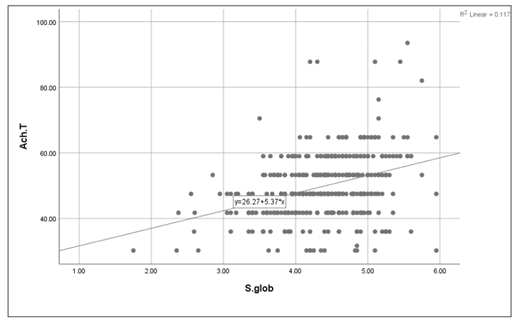
As shown in Figure 2, the regression line in the scatterplot signifies the satisfaction of the assumption of linearity. On the other hand, the residual plot confirms the satisfaction of the assumption of equal variances.
Further, the results of the Durbin-Watson test indicated a coefficient of 1.95 which implied satisfaction of the assumption of independence of observation. Finally, the correlation matrix of the subject variables and the variance inflation factor (VIF) were used to test for multicollinearity (Tsagris & Pandis, 2021). The correlation matrix with values below .8 and a VIF of 1.00 indicated the data was multicollinear. With all assumptions met, the researchers proceeded to conduct a linear regression on the study variables.
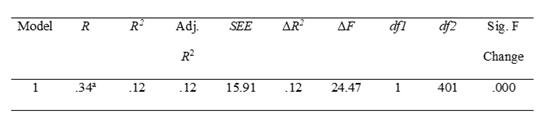
The results of the linear regression are as shown in Table 5.
Table 5. A Model Summary of the Linear Regression Analysis on the Prediction of Academic Achievement by Social Emotional Competence.
Note. N = 403
As shown in Table 5, the coefficient of determination in the prediction of academic achievement by social emotional competence (R2) was .12. This implied that the 12% variance in academic achievement was accounted by social emotional competence. Particularly, the model for the prediction of academic achievement by social emotional competence was significant—F (1, 401) = 24.47, p < .001. Hence, the null hypothesis was rejected.
Further, the study presented the regression coefficients of prediction of academic achievement by social emotional competence as shown in Table 6.
Table 6. Regression Coefficients of the Prediction of Academic Achievement by Social Emotional Competence.

Note. N = 403; SEC = Social Emotional Competence.
As depicted in Table 6, the unstandardized coefficient in the prediction of academic achievement from social emotional competence was B = 0.79. The coefficient suggested that a 0.79 unit increase in social emotional competence led to a corresponding increase in academic achievement by one unit. The overall prediction equation obtained from the study results therefore was:
ỹ = 20.85 + 0.79(SEC) Where: ỹ = Academic achievement score; SEC= Social emotional competence score.
Discussion
The findings of the present study revealed a positive and significant relationship between social emotional competence and academic achievement among Form Three students in Kericho County. This outcome reinforces the growing scholarly consensus that academic performance is shaped not only by cognitive ability but also by a student’s emotional, interpersonal, and behavioral skills. As Gimbert et al. (2023) assert, social emotional competence consists of a range of competencies—including emotional regulation, empathy, relationship-building, and responsible decision-making—that enable learners to navigate academic and social demands effectively. Given that academic achievement relies heavily on sustained engagement, resilience, and adaptability, it is unsurprising that students who manage their emotions well and maintain healthy social interactions tend to perform better academically.
The study’s results align with the argument presented by Varshini et al. (2025), who highlight that SEC supports students in handling everyday school-related stressors and promotes positive peer interactions. These competencies enhance learners’ capacity to cope with setbacks, collaborate in group tasks, and remain focused—factors that collectively underpin academic achievement. Similarly, Yang et al. (2023) demonstrates that students with higher social emotional competence display better classroom behavior, participate more actively, and form positive peer relationships, thereby creating conducive conditions for academic success. The significant association found in the current study strengthens this evidence base within the Kenyan secondary school context.
The findings also resonate with the findings of Naseem et al. (2024). In their study,which organized social emotional competence into five core domains—self awareness, self management, social awareness, relationship skills, and responsible decision-making—a significant relationship with academic performance was established. Cavioni et al. (2024) further emphasize that these competencies influence not only academic achievement but also broader life outcomes, such as mental health and future employability. The positive relationship identified in the present study may therefore reflect the cumulative benefits of these competencies in enhancing students’ motivation, behavior, and goal oriented decision making within the classroom environment.
While the findings corroborate numerous studies, including Sánchez Álvarez et al. (2020), they also offer important contextual insights. Much of the prior research has been conducted outside Kenya, with limited evidence available for local secondary school learners. For example, Panayiotou et al. (2019) found a positive relationship between social emotional competence and academic achievement among English elementary school students; however, the developmental differences between younger learners and adolescents limit the generalizability of their findings. The present study therefore extends the external validity of such research by confirming similar associations among older adolescents within a Kenyan context.
Contradictory findings in the literature further highlight the importance of contextualized research. Zhang and Peng (2023), for instance, reported no significant association between social emotional competence and reading achievement in a longitudinal U.S. sample. These discrepancies may stem from differences in measurement tools, age groups, socio-cultural contexts, or the academic domains examined. The current study’s significant results thus contribute to clarifying inconsistencies by offering evidence from a non-Western context and from secondary-level learners whose academic and emotional demands differ from those of younger children.
Studies conducted in Africa provide additional points of comparison. Obilor and Sakpege (2022), working with Nigerian senior secondary students, found that various social emotional competence components significantly predicted academic achievement. Although their findings align with those of the current study, contextual differences in curriculum and educational policies necessitate country-specific investigations Our findings also concur with Malhotra et al. (2021)’s study in reinforcing the importance of socio‑emotional skills in educational achievement. In their study, Malhotra et al. (2021) examined the impact of social emotional learning in Ugandan schools, focusing exclusively on adolescent girls. By contrast, the present study directly links social emotional competence to academic outcomes and includes a broader student population, thereby extending the evidence base beyond psychosocial benefits. These differences highlight the importance of contextualized research—while Malhotra et al. demonstrated socio‑emotional learning’s potential to improve well‑being, the current study contributes by showing its measurable impact on academic performance in a Kenyan secondary school context. Together, these findings underscore the multifaceted value of socio‑emotional skills, while also pointing to the need for further research that integrates both academic and psychosocial indicators across diverse populations.
In Kenya, the closest comparable research is that of Joyner (2021), who found that social emotional competence significantly influenced achievement among early-grade learners. The current study advances this knowledge by demonstrating that the relationship remains positive and significant among older students, suggesting that social emotional competence continues to play a crucial role throughout the schooling cycle.
Limitation
This study had several limitations that should be considered when interpreting the findings. First, the research relied on self reported and school record data, which may have been influenced by reporting biases or inconsistencies. Second, the study employed a cross sectional design, limiting the ability to draw causal conclusions about the relationship between social emotional competence and academic achievement. Third, the study was conducted in a single county—Kericho County—which may restrict the generalizability of the results to other regions with different socio economic or educational contexts. Fourth, the Social Emotional Scale (SES) used in this study was originally developed for elementary school populations, which may limit its sensitivity or appropriateness when applied to older students. Fifth, although the SES was administered in the Kenyan context, issues of cultural adaptation and validity remain important; constructs of social emotional competence may manifest differently across cultural settings, and further validation work is needed to ensure the instrument fully captures local realities. Lastly, the study examined overall social emotional competence without analyzing the unique influence of each sub component, leaving room for more detailed future investigations.
Conclusions and Implications
In conclusion, the present study provides evidence that social emotional competence is an important predictor of academic achievement among Kenyan secondary school students. The study’s findings imply that integrating social‑emotional learning into secondary education can enhance students’ academic success and overall well‑being. Schools should train teachers in social emotional learning strategies, broaden assessment frameworks to include social‑emotional indicators, and engage parents in supporting social emotional competence at home. Policymakers are encouraged to prioritize social emotional learning in national education reforms. Further research is needed to explore specific social emotional competence components, track long‑term impacts, and compare outcomes across diverse school settings in Kenya.
Recommendations
Based on the study’s findings, several recommendations are proposed. First, schools should integrate structured social‑emotional learning programs into the secondary school curriculum to strengthen students’ social emotional competence and enhance academic performance. Teachers should receive continuous professional development on social‑emotional learning—focused instructional strategies and classroom management practices. Additionally, school administrators should implement systems for monitoring students’ social‑emotional development alongside academic progress. Policymakers are encouraged to prioritize social‑emotional learning within national education reforms and allocate resources for its effective implementation. Finally, future research should examine social‑emotional learning components individually and include diverse regions to improve generalizability.
Funding
The research received no funding from any organization or institution.
References
- Amutuhaire, T. (2024). Internationalization and Student Mobility: Exploring the Mobility of Higher Education Students in East Africa [Doctoral dissertation, University of Bayreuth, Bayreuth International Graduate School of African Studies]. EPUB Bayreuth. https://doi.org/10.15495/EPub_UBT_00008099
- Bii, N., & Nzevu, J. (2024). International efficiency and performance: An assessment of secondary schools in Bureti District-Kenya. Journal of African Studies in Educational Management and Leadership, 3(1), 19–28. https://kaeam.or.ke/articles/vol3/Paper1.pdf
- Cavioni, V., Broli, L., & Grazzani, I. (2024). Bridging the SEL CASEL Framework with European educational policies and assessment approaches. International Journal of Emotional Education, 16(1), 6–25. https://boa.unimib.it/handle/10281/473760
- Coryn, C. L., Spybrook, J. K., Evergreen, S. D., & Blinkiewicz, M. (2009). Development and evaluation of the social-emotional learning scale. Journal of Psychoeducational Assessment, (4), 283–295. https://doi.org/10.1177/0734282908328619
- Finning, K., Ukoumunne, O. C., Ford, T., Danielsson-Waters, E., Shaw, L., De Jager, I. R., ... & Moore, D. A. (2019). The association between child and adolescent depression and poor attendance at school: A systematic review and meta-analysis. Journal of Affective Disorders, 245, 928–938. https://doi.org/10.1016/j.jad.2018.11.055
- Fischer, H. E., Boone, W. J., & Neumann, K. (2023). Quantitative research designs and approaches. In Handbook of research on science education (pp. 28–59). Routledge. https://doi.org/10.4324/9780367855758-3
- Ge, T., & Wang, L. (2019). Multidimensional child poverty, social relationships and academic achievement of children in poor rural areas of China. Children and Youth Services Review, 103, 209–217. https://doi.org/10.1016/j.childyouth.2019.06.007
- Gimbert, B. G., Miller, D., Herman, E., Breedlove, M., & Molina, C. E. (2023). Social emotional learning in schools: The importance of educator competence. Journal of Research on Leadership Education, 18(1), 3–39. https://doi.org/10.1177/19427751211014920
- Harris, D. J. (2023). Theory and principles of educational measurement. In Enhancing assessment in higher education (pp. 27–45). Routledge. https://doi.org/10.4324/9781003444534
- Hatem, G., Zeidan, J., Goossens, M., & Moreira, C. (2022). Normality testing methods and the importance of skewness and kurtosis in statistical analysis. BAU Journal-Science and Technology, 3(2), 7. https://doi.org/10.54729/KTPE9512
- Howard, M. C., Boudreaux, M., & Oglesby, M. (2024). Can Harman’s single-factor test reliably distinguish between research designs? Not in published management studies. European Journal of Work and Organizational Psychology, 33(6), 790–804. https://doi.org/10.1080/1359432X.2024.2393462
- Demir, B. (2023). Howitt, D., & Cramer, D. (2020). Research methods in psychology. London: Pearson.
- Lund, B. (2023). The questionnaire method in systems research: an overview of sample sizes, response rates and statistical approaches utilized in studies. VINE Journal of Information and Knowledge Management Systems, 53(1), 1–10. https://doi.org/10.1108/VJIKMS-08-2020-0156
- Malhotra, N., Ayele, Z. E., Zheng, D., & Amor, Y. B. (2021). Improving social and emotional learning for schoolgirls: An impact study of curriculum-based socio-emotional education in rural Uganda. International Journal of Educational Research, 108, 101778. https://doi.org/10.1016/j.ijer.2021.101778
- Mazarei, A., Sousa, R., Mendes-Moreira, J., Molchanov, S., & Ferreira, H. M. (2025). Online boxplot derived outlier detection. International Journal of Data Science and Analytics, 19(1), 83–97. https://doi.org/10.1007/s41060-024-00559-0
- Naseem, S., Naseer, N., & Rahim, M. (2024). Testing the CASEL Model: Exploring Relationship between Social Emotional Competencies and Academic Performance of Distance Learners. The Critical Review of Social Sciences Studies, 2(2), 370–383. https://thecrsss.com/index.php/Journal/article/download/43/44
- National Center for Education Statistics. (2024, July 24). NAEP: The Nation's Report Card. U.S. Department of Education. https://nces.ed.gov/nationsreportcard/
- Obilor, E. I. P., & Sakpege, M. P. (2022). Influence of students’ personality traits on academic achievement of students of public senior secondary schools in Rivers-East Senatorial District. International Journal of Innovative Psychology & Social Development, 10(1), 74–87. https://www.researchgate.net/profile/Esezi-Obilor/publication/398951976
- Panayiotou, M., Humphrey, N., & Wigelsworth, M. (2019). An empirical basis for linking social and emotional learning to academic performance. Contemporary Educational Psychology, 56, 193–204. https://doi.org/10.1016/j.cedpsych.2019.01.009
- Park, H. (2021). Reliability using Cronbach alpha in sample survey. The Korean Journal of Applied Statistics, 34(1), 1–8. https://doi.org/10.5351/KJAS.2021.34.1.001
- Park, H., & Lee, K. S. (2020). The association of family structure with health behavior, mental health, and perceived academic achievement among adolescents: A 2018 Korean nationally representative survey. BMC Public Health, 20(1), 510. https://doi.org/10.1186/s12889-020-08655-z
- Pederson, O. M. (2025). Beyond the exam score: An examination of the Kenyan education system, its reforms, inefficiencies, and impact on individuals and society at large. Honors Projects, 238. https://digitalcommons.spu.edu/honorsprojects/238
- Peng, P., & Kievit, R. A. (2020). The development of academic achievement and cognitive abilities: A bidirectional perspective. Child Development Perspectives, 14(1), 15–20. https://doi.org/10.1111/cdep.12352
- Robertson, S. A., & Graven, M. (2020). Language as an including or excluding factor in mathematics teaching and learning. Mathematics Education Research Journal, 32(1), 77–101. https://doi.org/10.1007/s13394-019-00302-0
- Sánchez-Álvarez, N., Berrios Martos, M. P., & Extremera, N. (2020). A meta-analysis of the relationship between emotional intelligence and academic performance in secondary education: A multi-stream comparison. Frontiers in Psychology, 11, 1517. https://doi.org/10.3389/fpsyg.2020.01517
- Sukmayadi, V., & Yahya, A. (2020). Indonesian education landscape and the 21st century challenges. Journal of Social Studies Education Research, 11(4), 219–234. https://www.learntechlib.org/p/218538/
- Thies, T. (2023). International students in higher education: the effect of student employment on academic performance and study progress. Higher Education, 86(4), 933–951. https://doi.org/10.1007/s10734-022-00950-5
- Tsagris, M., & Pandis, N. (2021). Multicollinearity. American Journal of Orthodontics and Dentofacial Orthopedics, 159(5), 695–696. https://www.ajodo.org/action/showPdf?pii=S0889-5406%2821%2900104-9
- Vadivel, B., Alam, S., Nikpoo, I., & Ajanil, B. (2023). The impact of low socioeconomic background on a child’s educational achievements. Education Research International, 2023(1), 6565088. https://doi.org/10.1155/2023/6565088
- Varshini, N. H., Balaraju, K., & Sampath, B. (2025). Social-emotional development: Nurturing the foundation of well-being. Cuestiones de Fisioterapia, 54(2), 1131–1136. https://cuestionesdefisioterapia.com/index.php/es/article/view/826
- Yamane, T. (1967). Statistics: An introductory analysis (2nd ed.). New York: Harper and Row.
- Yang, J., Deng, Y., & Wang, Y. (2023). Reciprocal associations among social–emotional competence, interpersonal relationships and academic achievements in primary school. Behavioral Sciences, 13(11), 922. https://doi.org/10.3390/bs13110922