


Home / Journal / Interdisciplinary Education and Psychology
Classroom Learning Environment and Academic Achievement among
Form Three Students in North East Region, Botswana: Testing Gender as a
Moderator
Classroom learning environment academic achievement moderating role of gender secondary education
Onalenna Lucky,
Elizabeth Mwaniki, Josephine Mutua
DOI: 10.31532/InterdiscipEducPsychol.5.1.003 15 May 2026
Download

Abstract
High academic achievement opens many opportunities for students’ progression in life. It is therefore worrying when low academic achievement is persistent in the North East Region of Botswana, where achievement indicators have consistently fallen below national targets. To account for this observed underachievement, the present study examined the relationship between classroom learning environment and academic achievement among form three students, as well as moderating role of gender in the relationship. Using a correlational research design, data was collected from 435 students (222 females, 213 males) across nine junior secondary schools using the Classroom Climate Scale (Vessels, 1998) and end-of-term examination results. Pearson Product-Moment Correlation test revealed a weak but statistically significant positive relationship between classroom learning environment and academic achievement (r = .159, p < .01). Description on the moderating role of gender shows that boys rated student-student relationships higher (M = 2.62, SD = 0.60) than girls (M = 2.53, SD = 0.69), while girls scored marginally higher on awareness and reporting mechanisms (M = 3.00, SD = 0.64 vs. M = 2.98, SD = 0.62). Moderation analyses show that gender did not moderate the relationship between classroom learning environment and academic achievement. The findings suggest that while classroom learning environment contributes to academic achievement, its influence remains modest compared to other potential factors. The study concludes with a discussion of practical implications and recommendations for future research. These include the introduction of cooperative learning activities and teacher professional development directed at individualized feedback and emotional responsiveness.
Keywords
Classroom learning environment, academic achievement, moderating role of gender, secondary education
Introduction
Academic achievement is a critical determinant of individual life trajectories and national development outcomes (Bouchrika, 2024). High academic achievement opens pathways to tertiary education, enhances employability, and facilitates upward social mobility while contributing to national economic growth through the development of skilled human capital (Azizbek, 2023). Conversely, persistent low academic achievement restricts career opportunities, perpetuates poverty cycles, and may lead to behavioral challenges, including school dropout, truancy, and substance abuse (Abulencia, 2021).
Despite global recognition of education's transformative potential, poor academic achievement remains a persistent challenge across diverse national contexts, though the factors driving underperformance vary considerably by setting. In resource-constrained contexts such as Indonesia and Nigeria, systemic supply-side deficiencies have emerged as primary barriers to quality secondary education. Particularly, these include teacher shortages, low enrollment rates, and inadequate physical infrastructure (Shaturaev, 2022; Suleiman & Umejiaku, 2023). In contrast, settings with relatively more stable infrastructural conditions reveal a different profile of challenges. In Bangladesh, for instance, achievement gaps are more strongly attributed to behavioral and relational factors such as irregular class attendance, excessive social media use, and limited family collaboration (Shahjahan et al., 2021). In Ethiopia, inadequate facilities intersect with psychosocial barriers including poor emotional coping skills among students (Kassaw & Demareva, 2024). This pattern suggests that as basic structural conditions are met, psychosocial and environmental factors assume greater explanatory weight in accounting for differences in academic achievement. finding that carries direct implications for how interventions should be prioritized in any given setting.
Within sub-Saharan Africa and Botswana's context specifically, this interplay between structural and psychosocial determinants is particularly relevant. National examination data from the North East Region spanning 2020 to 2024 reveal a pattern of persistent underperformance against the national and regional target of 60%. Specifically, the North East region posted an average performance of 42.74% in 2020, 47.12% in 2021, 43.65% in 2022, 40.70% in 2023, and 49.45% in 2024 (Botswana Examinations Council [BEC], 2020–2024). Notably, this underperformance has remained stubbornly consistent across five years despite national policy attention to educational quality. This point to the probability that structural interventions alone may be insufficient and that psychosocial dimensions of the learning environment, which have received comparative attention in this region, may constitute an underexplored explanatory factor. It is against this backdrop that the present study examines the classroom learning environment as a potentially meaningful, yet modifiable, contributor to academic achievement in the Northeast Region.
Classroom Learning Environment and Academic Achievement The classroom learning environment has been consistently theorized as a critical contextual factor shaping student learning outcomes, though empirical evidence reveals considerable variation in the strength and nature of this relationship across contexts. Nwokedi (2023) conceptualized classroom learning environment as encompassing physical settings, cultural contexts, and psychosocial climates that collectively enable students to perform at their highest potential. Further, Nindiasari and Samad (2024) elaborated that it comprises student grouping arrangements, physical infrastructure, and behavioral interaction patterns among classroom occupants. Together, these conceptualizations highlight a fundamental distinction in the literature between physical-structural and psychosocial dimensions of the classroom environment. This distinction has significant implications for how studies operationalize and measure the construct, and consequently for the comparability of their findings.
Empirical studies drawing on psychosocial conceptualizations tend to report associations mediated through motivational processes. Cai et al. (2022), examining 2,556 Chinese students aged 10–16 using structural equation modeling, established that classroom environments positively influenced task value and self-regulation, which subsequently predicted academic outcomes, with task orientation, teacher support, equity, and cooperation emerging as particularly influential dimensions. Similarly, Hanaysha et al. (2023), studying 314 university students in the United Arab Emirates, identified classroom settings and institutional facilities as significant predictors of academic achievement, moreover the study established student engagement as a mediating variable. Taken together, these findings suggest that the classroom environment does not directly determine achievement but operates through motivational and self-regulatory mechanisms, a pattern consistent with Self-Determination Theory (SDT; Deci & Ryan, 2000).
However, evidence from studies focusing on the physical and structural dimensions of the classroom environment complicates this interpretation. Within African contexts specifically, Ikegbusi et al. (2021), exploring school environment and preschool academic achievement in Nigeria, demonstrated that physical infrastructure significantly impacted students' learning interest. This suggests that structural factors may operate more directly on outcomes in under-resourced settings where basic physical conditions are not yet adequately met. Kamoet and Mbirithi (2024), in a larger-scale Kenyan study of 1,000 participants in Mombasa County, similarly found that class size, teacher-student ratios, instructional strategies, and resource allocation significantly influenced academic achievement. While these African studies demonstrate robust environmental effects, their broader operationalization of the construct, encompassing physical and administrative dimensions alongside psychosocial ones, may partially explain the stronger associations they report compared to studies focused exclusively on relational or psychosocial dimensions. This methodological divergence makes cross-study comparisons difficult and underscores the need for clarity in how the construct is defined and measured.
Within Botswana specifically, the evidence base remains limited and context specific. Khutsafalo and Makambe (2020), investigating 127 Hospitality Management students at a tertiary institution, found positive associations between learning environment and learner motivation, with teacher behavior emerging as particularly influential. While informative, the study's university-level focus and small sample size limit applicability to secondary school contexts, where student autonomy, instructional approaches, and environmental characteristics differ substantially. Musau et al. (2023), examining 91 participants in Katulani Sub-County, Kenya, similarly demonstrated strong positive associations between supportive learning environments and academic outcomes but did not specify which environmental elements exerted the greatest influence or control for confounding variables. Collectively, these regional studies point toward the importance of the classroom environment while simultaneously revealing the methodological limitations that constrain the conclusions that can be drawn.
Moderating Role of Gender in Classroom Learning Environment and Academic Achievement Gender represents a theoretically plausible moderating variable in the classroom environment-achievement relationship, yet existing evidence is notably inconsistent. This is notably a product of the influence of cultural context, developmental stage, and the specific environmental dimensions under examination. Several studies report significant gender moderation. Yang and Zheng (2024), in a large-scale study of 34,968 fifteen-year-old students across five East Asian economies, established that gender significantly moderated the relationship between teacher support and students' subjective well-being. The study established that support proved more beneficial for girls than boys. Munir et al. (2021) similarly reported stronger environment-achievement correlations among Pakistani female university students compared to males. The findings highlight that girls may be more responsive to relational environmental conditions. Yeboah et al. (2025) further found that gender moderated technology adoption among 384 Ghanaian students, with females more influenced by social support and males by achievement expectancy.
In contrast, evidence from Botswana's own educational context presents a more nuanced picture. Motsumi and Shehu (2021), analyzing 96 physical education classes in junior secondary schools through observational methods, established statistically significant correlations between student gender and teacher-student interactions regarding task distribution and behavior management. However, this finding is difficult to generalize beyond physical education, a subject whose highly gendered nature regarding physical activity and body-related concerns may amplify differences that are absent in general academic contexts. Crucially, none of the Botswana-based studies have examined gender moderation specifically within mainstream secondary classroom environments using psychosocial measures, leaving a significant contextual gap.
Taken together, the cross-cultural inconsistency in gender moderation findings suggests that the moderating role of gender may be context-dependent rather than universal. The pronounced gender effects observed in East Asian and South Asian studies may partly reflect stronger gender-differentiated socialization patterns in those cultural contexts, whereas Botswana's national emphasis on gender equity in education, reflected in near-parity secondary school enrollment indices (CEIC Data, 2022), may produce more equitable classroom experiences. Furthermore, the developmental stage of participants appears relevant; university students may have developed more differentiated environmental perceptions than secondary students who experience more standardized classroom structures. These inconsistencies collectively point toward the need for context-specific investigation within Botswana's secondary school setting before generalizations from international literature are assumed to apply.
Theoretical Framework
This study was grounded in the Self Determination Theory (Ryan & Deci, 2000). The SDT had gained substantial empirical support across different spheres of motivation from educational contexts to the workplace. It posits that human beings possess three innate and universal psychological needs whose satisfaction is essential for optimal intrinsically motivated human functioning. The three needs are competence, autonomy and relatedness. Competence is feeling effective in one’s interactions with the environment. Relatedness on the converse explores meaningful connections to others and the sense of belonging whereas autonomy refers to volition and self-endorsement of one’s actions (Ryan & Deci, 2017). The theory holds that social environment, including classrooms, can either support or thwart these three needs, with direct consequences for motivation, engagement, and performance (Vansteenkiste et al., 2020).
The applicability of SDT to classroom learning environments is well-established in literature. Reeve and Cheon (2021) demonstrated that autonomy-supportive teaching, characterized by acknowledging student perspectives, providing rationales for tasks, and minimizing external pressure, significantly predicted student engagement and internalization of academic values. Niemiec and Ryan (2009) reviewed SDT-based educational research and concluded that classroom contexts supporting all three basic needs consistently produced higher levels of intrinsic motivation, deeper information processing, and better academic outcomes compared to controlling or need-thwarting environments. More recently, Vasconcellos et al. (2020) conducted a meta-analysis of 344 studies and confirmed that need satisfaction in educational settings was a robust predictor of autonomous motivation, which in turn predicted academic achievement.
Classroom learning environment explored relational quality, psychological safety, and support perspective. CLE was assessed through the quality of peer and teacher relationships as well as perceived safety from and support from these social agents. Classrooms where positive peer relations are normative provide a socially embedded context within which students feel psychologically safe to invest effort, take academic risks, and sustain engagement. Further, when students know that adults will act responsibly on disclosures of peer aggression and that help-seeking is institutionally sanctioned, the classroom environment is perceived as a safe space for authentic engagement (Yoo et al., 2025). Moreover, autonomy supportive teacher behaviors such as fairness and respect, as opposed to controlling tendencies such as conditional regard and unfair criticism, nurture the student’s autonomy support (Wambui et al., 2026).
With respect to gender, SDT's Basic Psychological Needs Theory explicitly posits that the three needs are universal, operating equivalently across demographic groups (Ryan & Deci, 2017). Nevertheless, empirical evidence indicates that gendered differences in need satisfaction perceptions do emerge in practice, with girls reporting comparatively higher perceived motivation across SDT dimensions in certain contexts (Ajlouni et al., 2022; Wang et al., 2024). Such variation has been attributed to the moderating influence of cultural norms, socioeconomic conditions, and prevailing educational structures rather than to differences in the fundamental needs themselves (Wang et al., 2024). Against this backdrop, the present study examined whether the SDT-based environmental framework operated uniformly across genders within the specific cultural and educational setting.
Research Gaps and Study Purpose Despite substantial literature on classroom learning environment's influence on academic achievement, several gaps warrant investigation. First, most existing research originates from Western and Eastern contexts, with limited representation of African educational systems characterized by distinct socio-cultural dynamics, resource constraints, and pedagogical approaches. Where African studies do exist, they tend to emphasize physical-structural rather than psychosocial environmental dimensions, limiting theoretical comparability. Second, while the moderating role of gender in educational outcomes has been documented in international literature, the evidence is inconsistent across cultural contexts. Further, the specific patterns within Botswana's secondary school setting remain underexplored. This is particularly with respect to SDT's universality hypothesis regarding basic psychological need satisfaction across genders. Third, the persistent achievement gap in the North East Region suggests that localized investigations are needed to inform context-specific interventions.
The current study addressed these gaps by examining the relationship between classroom learning environment and academic achievement among form three students in the North East Region, Botswana, while exploring the moderating role of gender in this relationship. Form three students represent an appropriate population as they approach completion of junior secondary education and face critical transition points requiring optimal learning conditions. From the foregoing, the study sought to test the following hypotheses:
Ha1: There is a significant relationship between classroom learning environment and academic achievement.
Material and Methods
Research Design The study employed a correlational research design to investigate relationships between classroom learning environment and academic achievement while exploring potential moderating role of gender. Correlational designs enable examination of association patterns and predictive relationships among naturally occurring variables without manipulation (Taherdoost, 2022), making this approach appropriate for the study's objectives.
Study Setting and Contextual Considerations The study was conducted in Botswana's North East Region. The site was selected due to persistent academic underperformance, with most secondary schools not meeting the regional target of 60% in merit and recommended tertiary education pass rate target over the preceding five years.
The target population comprised 3,616 form three students enrolled across 18 public junior secondary schools in the region in 2025 (Mage = 16 years; 1,777 males, 1,839 females). Form three students were purposively selected as they had completed more than two years of secondary education, providing sufficient exposure to classroom learning environments to form reliable perceptions, while also facing imminent Junior Certificate Examinations requiring optimal learning conditions.
Sampling Strategy A multi-stage sampling approach was employed. First, the North East Region and form three classes were purposively selected based on research objectives and regional achievement concerns. Second, schools were stratified by type (day only schools vs. day-and-boarding schools) to ensure representation of different institutional contexts. Using proportionate stratified random sampling, nine schools (50% of the population) were selected: six day schools and three day-and-boarding schools, following Kothari's (2019) recommendation that samples comprising 10% or more of the population are representative.
Sample size was determined using Krejcie and Morgan's (1970) table, yielding 351 students for a population of 3,616. To account for potential non-response, the sample was adjusted to 438 students. Within selected schools, simple random sampling was applied to select students proportionally by gender (215 males, 223 females).
Measurement Instruments Classroom Climate Scale: To measure the classroom learning environment, an adapted version of the Classroom Climate Scale (Vessels, 1998) was utilized. The instrument was initially structured as a 27-item summative measure, with items distributed across three subscales: student–student relationships, teacher–student relationships, and awareness/reporting. All items were rated on a 4-point Likert scale ranging from 1 (strongly disagree) to 4 (strongly agree). Example items included: “Students get along well together most of the time” (student–student relationships subscale), “Teachers take the time to help students work out their differences” (teacher–student relationships subscale), and “Students are encouraged to report bullying and aggression” (awareness/reporting subscale). The instrument has demonstrated prior evidence of psychometric robustness in existing literature. Specifically, studies involving American student samples reported Cronbach’s alpha coefficients ranging from .79 to .89 across the subscales (Elsaesser et al., 2013), while a study among Danish teachers reported a reliability coefficient of α = .84 (Caucasus Research Resource Centers, 2025). However, despite this established reliability, pilot testing in the current study yielded an average internal consistency of α = .70, alongside weak validity coefficients. Consequently, to enhance both response efficiency and the psychometric properties of the scale, item reduction procedures were undertaken. This process resulted in an 18-item measure, which was subsequently used in the main study (as detailed in the pilot study section). Scale scores were computed using mean item scores, a procedure adopted to improve the interpretability and comparability of results across respondents.
Academic Achievement: Academic achievement was operationalized as students' end-of-Term 1, 2025 summative assessment results. These assessments represented comprehensive evaluations averaging performance across core subjects (e.g., integrated sciences, mathematics, languages), general subjects (e.g., agriculture, moral education, social studies), and optional subjects (e.g., commerce, religious education). Raw percentage scores were standardized by converting them to z-scores and subsequently to T-scores to ensure comparability across schools. This transformation represents standard practice for enabling meaningful cross-institutional comparisons (Andrade et al., 2021; Van der Linden et al., 2021).
Pilot Study Prior to the study, a pilot study was done to establish the tools psychometrics and assess and anticipate logistical challenges. In the study, a sum of 42 students participated, all drawn from one school, which was excluded in subsequent analyses. From the analyses, response patterns noted missingness related to respondent fatigue. In pursuit of parsimony through item reduction, exploratory factor analysis was performed to assess the relative loadings of each of the items to the variable as well as the confirmation of the underlying factor structure. Orthogonal rotation was used where the 27-item Classroom Climate Scale items were assessed. The scree plot showed three key factors above an eigen value of 1., mirroring the current three factors in the study which is evidence of validity of the scale. The three accounted for 54.11% of the variance in the classroom learning environment. Nine Items with a loading of less than .30 were identified (Hair, 2019) and removed from the analysis resulting in the current 18 item scale. The analyses were rerun to test the overall validity and reliability of the model. The resulting scale a reliability of α = .81.
To establish the factorial validity of the Classroom Climate Scale, a confirmatory factor analysis (CFA) was conducted. Factor loadings, composite reliability (CR), average variance extracted (AVE), and overall model fit indices were examined against established psychometric benchmarks. Following Hair et al. (2012), acceptable thresholds were set at factor loadings ≥ .50, CR ≥ .70, and AVE ≥ .50. Inspection of standardized factor loadings revealed that the majority of indicators met or exceeded the recommended threshold. A small number of items returned loadings below .50; however, these were retained on theoretical grounds. As Collier (2020) cautions, the routine deletion of weakly loading items risks eliminating indicators that capture conceptually distinct facets of the construct not adequately represented by stronger-loading items alone.
The scale demonstrated a composite reliability of .77, exceeding the minimum threshold of .70 and confirming the internal consistency of the measure. The AVE of .56 surpassed the .50 criterion, providing evidence of satisfactory convergent validity and indicating that the latent construct accounts for the majority of variance in its indicators (Fornell & Larcker, 1981). Model fit was evaluated using a combination of absolute and incremental fit indices. The model demonstrated acceptable fit to the data: CMIN/DF = 1.20, CFI = .99, TLI = .99, and GFI = .98, all within recommended ranges.
Data Collection Procedures Following ethical approval from Kenyatta University's Graduate School and research authorization from Botswana's Ministry of Child Welfare and Basic Education through the North East Regional Education Office, school heads were contacted to arrange data collection sessions. Parents and students provided informed consent prior to participation, with parental consent serving as legal authorization for students under 18 years.
Data collection occurred during regular school hours in classroom settings. The researcher and trained research assistants administered self-report questionnaires to students, who were given 40 minutes to complete the instruments. Confidentiality was ensured through anonymous coding systems, with no personally identifiable information collected. Academic achievement data were subsequently obtained from class teachers' records with appropriate authorization.
Result
Response Rate and Data Screening Of 438 distributed questionnaires, 435 were returned, yielding a 99.3% response rate. Return rates by school type were 98.9% for day schools (261 of 264 distributed) and 100% for day-and-boarding schools (174 of 174 distributed). Data screening revealed no cases with more than three missing values; missing data were imputed using the expectation maximization method. As Alwateer et al. (2024) highlights, this method was well suited as it preserves the relationships and ensures valid inferences. No data entry errors or problematic outliers were identified.
Sample Characteristics and Data Quality The final sample comprised 435 students: 213 males (49.0%) and 222 females (51.0%). Day schools contributed 261 participants (60.0%), while day-and-boarding schools contributed 174 participants (40.0%). Age distribution showed 8 students (1.8%) aged 12-14 years, 393 students (90.3%) aged 15-16 years, and 34 students (7.8%) over 16 years. The mean age was 15.67 years (SD = 1.08, range 12-22 years), consistent with the typical age for form three students in Botswana (Mokgatlhe, 2023). Chi-square tests indicated no significant age differences by school category (χ² = 1.147, p = .564) or gender (χ² = 8.695, p = .096), confirming sample homogeneity.
Descriptions of Classroom Learning Environment Scores
Table 1. Respondents’ Descriptions of the Classroom Learning Environment and Respective Subscales.

As highlighted in Table 1, classroom learning environment scores averaged 2.72 (SD = 0.48) on the 4-point scale, indicating moderately positive perceptions. The distribution was approximately normal (skewness = -0.33, kurtosis = -0.08), with scores ranging from 1.20 to 3.90. The overall internal consistency was at the acceptable thresholds (α = .77) as well as across the different subscales. Further descriptive analyses examined classroom learning environment by subscales and demographic categories. Awareness and reporting mechanisms received the highest ratings (M = 2.99, SD = 0.63), followed by teacher-student relationships (M = 2.63, SD = 0.65) and student-student relationships (M = 2.58, SD = 0.65). All subscales exhibited negative skewness, most pronounced for awareness and reporting (skewness = -0.56), indicating that students generally perceived clear channels for reporting classroom concerns. When examined by school category, students in day schools reported marginally higher classroom learning environment perceptions (M = 2.72, SD = 0.47) than those in day-and-boarding schools (M = 2.69, SD = 0.52), though differences were minimal. Age-based analyses revealed that students over 16 years expressed the most positive perceptions (M = 2.83, SD = 0.50), compared to 15–16-year-olds (M = 2.71, SD = 0.47) and 12–14-year-olds (M = 2.56, SD = 0.33). This could be attributed to greater emotional maturity and adjustment to school environments with increased age.
Further the analyses of classroom learning environment, and its subscales by gender was performed as highlighted in Table 2.
Table 2: Classroom Learning Environment Scores by Gender

Overall, Table 2 indicates that nearly identical scores were realized for boys (M = 2.73, SD = 0.45) and girls (M = 2.71, SD = 0.49). This suggests that both genders hold very similar overall perceptions of their classroom learning environment. Subtle differences were noted in the awareness/ reporting (M = 3.00, SD = 0.64) subscale in favour of girls. Teacher-student relationship subscales had a similar means across the genders (M = 2.63) with differences in the standard deviation. The most significant gender difference was found in the student-student relationship subscale. Boys had a higher average score (M = 2.62, SD = 0.60) than girls (M = 2.53, SD = 0.69). This highlights the variability of girls’ perceptions of their relationships with their peers.
Description of Students’ Academic Achievement Scores
Table 3. Description of Students’ Academic Achievement Scores.

Academic achievement T-scores exhibited the expected standardized distribution with slight positive skewness (0.22) and kurtosis (1.05) within acceptable ranges. The raw percentage scores prior to transformation averaged 43.76% (SD = 12.66, range 0-84%), indicating slightly below-average performance overall. Academic achievement varied by school category and gender. Day-and-boarding schools demonstrated slightly higher mean achievement (M = 50.87, SD = 12.25) compared to day schools (M = 49.87, SD = 9.64). Girls (M = 51.87, SD = 9.56) outperformed boys (M = 48.02, SD = 10.09), consistent with national trends in Botswana.
Hypothesis Testing
Hypothesis 1: Relationship Between Classroom Learning Environment and Academic Achievement.
Prior to correlation analysis, assumptions were verified by the generation of a scatter diagram. This confirmed linearity and homoscedasticity, with no outliers or curvilinear patterns evident. Variables met interval measurement requirements through composite scoring. Normality was satisfied based on skewness and kurtosis values within acceptable ranges discussed in the descriptives section.
Having satisfied Pearson’s Product Moment Correlation assumptions, the null hypothesis below tested.
H01: There is no significant relationship between classroom learning environment and academic achievement
Table 4. correlation Between Classroom Learning Environment and Academic Achievement

As indicated in Table 4, a weak positive relationship between classroom learning environment and academic achievement, r (433) = .159, p = 007, was established. Thus, the null hypothesis was rejected. The coefficient of determination (r² = .0253) indicated that classroom learning environment accounted for approximately 2.53% of variance in academic achievement. Thus, Hypothesis 1 was supported: classroom learning environment was significantly related to academic achievement, though the magnitude of association was modest.
Hypothesis 2: Moderating role of Gender in the Relationship Between Classroom Learning Environment and Academic Achievement
Regression analyses were used to examine if gender moderate the relationship between classroom learning environment and academic achievement. The following null hypothesis was tested.
H02: Gender does not significantly moderate the relationship between classroom learning environment and academic achievement.
Prior to the analyses however, a scatter diagram was generated to visually assess the relationships between the variables by gender. This is highlighted in Figure 1.
Figure 1 . Scatter Diagram on the Relationship between Classroom Learning Environment and Academic Performance by Gender.
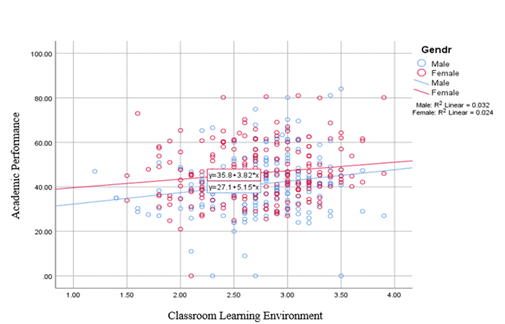
As illustrated in figure 1, boys had a relatively stronger relationship between classroom learning environment and academic achievement. To further explore the objective, a hierarchical multiple regression analysis was performed to examine whether gender moderates the relationship between classroom learning environment and academic achievement. Prior to the analysis, gender was dummy coded (male = 0, female = 1), and the independent variable, classroom learning environment, was mean centered to reduce multicollinearity.
The variables were entered in three steps. In Step 1, classroom learning environment was entered and accounted for 15.9% of the variance in academic achievement (R² = .159, F (1, 433) = 11.18, p < .001). In Step 2, gender was added to the model, resulting in a significant increase in explained variance (ΔR² = .093; p = .01), with the model accounting for a total of 25.2% of the variance in academic achievement (R² = .252; F (2, 432) = 14.60, p = .01). In Step 3, the interaction term (classroom learning environment × gender) was entered. This step did not significantly improve the model (ΔR² = .006, p = .046), with the final model explaining 25.8% of the variance in academic achievement (R² = .258, F (3, 431) = 9.81, p = .16). The coefficients for the third model are highlighted in Table 5.
Table 5: Regression Coefficients for the Moderation of Gender in the Relationship Between Classroom Learning Environment and Academic Achievement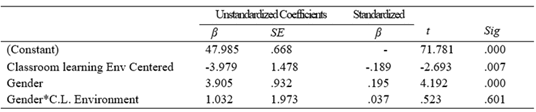
As indicated in Table 5, on the third model, the interaction term was not significant (β = .037, p = .601), indicating that gender did not moderate the relationship. Thus, the null hypothesis on the moderation of gender failed to be rejected. It was thus concluded that gender did not substantially affect the strength of the students’ relationships between classroom learning environment and academic achievement.
Discussion
The present study established a weak but statistically significant positive relationship between classroom learning environment and academic achievement (r = .159, p < .01), indicating that supportive classroom learning environments contribute modestly to students’ achievement. This finding aligns with empirical evidence from Cai et al. (2022), who demonstrated that classroom environments incorporating task orientation, teacher support, equity, and cooperation positively influenced Chinese students' task value and self-regulation, which subsequently predicted academic outcomes. When students experience classrooms characterized by respectful teacher-student interactions, clear reporting mechanisms, and positive peer relationships, they develop stronger academic self-concept and increased willingness to engage with learning materials through help-seeking behaviors, active participation, and sustained effort investment. Similarly, Kamoet and Mbirithi (2024) established that classroom factors including teacher-student ratios and instructional strategies significantly influenced Kenyan secondary students' achievement, suggesting that optimal learning conditions enable increased individual attention and personalized feedback that collectively enhance academic achievement.
The modest effect size (r² = .025) observed in this study, while statistically significant, indicates that classroom learning environment explains only 2.53% of achievement variance. These findings are slightly lower than the effect sizes established in metanalytical studies. Particularly, studies have established correlation coefficients between r =.20 and .30 (Konold et al., 2018). However, recent meta‑analytic evidence indicates that classroom climate is positively associated with academic achievement with a small average effect (r ≈ .16), while school climate shows a moderate association (r ≈ .28) with achievement outcomes (Erdem & Kaya, 2024). This is explained by the fact that school climate operates in the broader, and more powerful level than school climate.
Given that academic achievement is multidetermined, this limited explanatory power may reflect several factors. Primarily the study undertook a relational normative approach to classroom learning environment. Specifically, focus was directed to interrelationships between peers and teachers and did not attempt to measure learning processes such as instructional clarity, feedback on learning rules clarity and institutional connectedness (Bear et al., 2011; Comorelli, 2017). Further standardized examination formats in Botswana may introduce variance attributable to test-taking skills, examination anxiety, and assessment familiarity that dilute classroom learning environment effects on measured achievement. Academic achievement represents a multidetermined outcome influenced by numerous individual, family, and institutional factors that collectively account for the substantial unexplained variance.
This interpretation aligns with SDT's organismic integration, which locates academic achievement at the end of a motivational chain that begins with environmental need support but passes through internalization processes that are additionally shaped by individual differences in prior achievement, self-efficacy, and parental academic socialization (Deci & Ryan, 2000; Vasconcellos et al., 2020). The classroom environment is therefore one node in a broader ecological network of influences, consistent with the limited variance explained.
The finding that awareness and reporting mechanisms received highest ratings while teacher-and student-student relationships scored lower suggests that North East Region schools have successfully established procedural structures for addressing classroom concerns but may underemphasize relational dimensions that facilitate learning. This pattern diverges from Monteiro et al. (2021), who found that teacher feedback quality, a relational construct, significantly influenced student engagement and school identification among Portuguese students. The comparatively weaker relational scores may reflect teacher-centered pedagogies prevalent in Botswana secondary schools, where limited collaborative learning opportunities constrain positive peer interactions. Competitive grading practices may foster peer rivalry rather than cooperation, inhibiting the supportive peer relationships that characterize effective learning environments. This indicates that the relatedness need may only be partially satisfied in the population. As Reeve and Cheon (2021) argue, the relatedness need satisfaction requires not merely procedural civility but genuine interpersonal investment from teachers and peers. Findings suggest that while structural mechanisms may be in place, deeper relationships required for the satisfaction of the need may be underdeveloped.
Some studies report stronger classroom environment-achievement associations than observed here. Musau et al. (2023) demonstrated robust positive correlations between learning environment and academic achievement among Kenyan secondary students, possibly because their broader environmental conceptualization encompassing physical infrastructure and administrative support captured additional variance beyond classroom-specific psychosocial dimensions. Similarly, Khutsafalo and Makambe (2020) found that learning environment strongly predicted learner motivation among Botswana tertiary students, though university contexts differ substantially from secondary schools in student autonomy, instructional approaches, and environmental characteristics. Cultural variations may also contribute to differential effect sizes; collectivist societies where classroom harmony and teacher authority are highly valued may exhibit stronger environment-achievement linkages than contexts emphasizing individual achievement.
From an SDT perspective, this finding reflects the theorized pathway whereby need-supportive classroom conditions, characterized by positive relational structures and psychologically safe reporting mechanisms, foster autonomous motivation, which in turn translates into achievement-related behavior. The modest but significant association is consistent with SDT's proposition that environmental need support operates as a distal, contextual antecedent to achievement, with motivation serving as the more proximal mechanism (Vansteenkiste et al., 2020). The effect size, while small, is theoretically meaningful within SDT, as environmental factors are not expected to directly determine outcomes but to provide the facilitative conditions within which individual motivational processes unfold.
Regarding the moderating role of gender in classroom learning environment, boys and girls reported nearly identical overall perceptions, indicating equivalence in how both genders experienced classroom climates. This similarity extended across subscales, with both genders reporting identical teacher-student relationship perceptions and minimal differences in awareness/reporting mechanisms. The most notable, though non-significant, difference emerged in student-student relationships, where males rated peer interactions marginally higher (M = 2.62, SD = 0.60) than females (M = 2.53, SD = 0.69), possibly reflecting differential navigation of competitive academic dynamics or girls' heightened sensitivity to subtle relational aggression common in adolescent female peer groups. This is consistent with the SDT’s universality thesis that the three basic psychological needs are fundamental for all, regardless of gender (Ryan & Deci, 2017).
This gender equivalence contrasts with Yang and Zheng's (2024) finding that gender significantly moderated teacher support-wellbeing relationships among East Asian students, with support proving more effective for girls. The discrepancy may reflect cultural differences in gender role expectations. Collectivist Eastern cultures exhibiting more pronounced gender-differentiated socialization may create divergent classroom experiences. In contrast, Botswana's national emphasis on gender equity in education, reflected in secondary enrollment gender parity indices near 1.11 (CEIC Data, 2022), may have translated into more equitable classroom practices. Additionally, developmental stage differences may explain variations; university students examined by Munir et al. (2021) may have developed more differentiated perceptions than secondary students who experience more standardized classroom structures. Motsumi and Shehu's (2021) contrasting findings of significant gender effects in Botswana physical education contexts likely reflects subject-specific dynamics. Physical education's highly gendered nature regarding physical activities and body-related concerns may amplify differences absent in general academic contexts.
The absence of gender moderation in the classroom learning environment-achievement relationship further supports the equivalence interpretation. Both males and females appeared to benefit similarly from supportive classroom learning environments in their academic achievement, suggesting that environmental factors influence student outcomes through universal mechanisms rather than gender-specific pathways. This finding indicates that classroom improvement initiatives need not differentiate by gender but can employ consistent strategies benefiting all students. The current findings suggest that within North East Region's educational environment, classroom factors exert relatively uniform influences on male and female students' educational experiences, indicating that teachers' communication patterns, support provision, and classroom management do not systematically vary by student gender in ways creating divergent environmental perceptions or differential achievement benefits.
Limitations
The cross-sectional design precludes causal inferences as directionality remains uncertain; higher-achieving students may contribute to positive climates through engaged behaviors, or reciprocal relationships may exist. Self-report measures introduce potential biases as student perceptions may reflect dispositional factors alongside objective environmental characteristics. Academic achievement measured via end-of-term examinations represents limited temporal snapshots potentially influenced by transient factors. While a stable measure of academic achievement, the summative examination scores were not controlled for assessment quality and marking criteria. Future studies may adopt other measures of achievement such as standardized achievement, value added measures or cumulative GPA.
The sample's restriction to form three students in one region limits generalizability to other developmental stages and educational contexts. The Classroom Climate Scale captured limited environmental dimensions, excluding physical infrastructure, resource availability, and class size. Unmeasured confounding variables including prior achievement, socioeconomic status, and home learning environments may partially explain observed associations.
Recommendations
The findings of this study carry several specific and actionable implications for teachers, school administrators, policymakers, and future researchers. The identification of student-student relationships as the weakest CLE dimension suggests that teachers should deliberately introduce structured cooperative learning activities on a regular basis to actively strengthen positive peer interactions. This may include peer tutoring, group problem-solving, and collaborative projects. Furthermore, given that teacher-student relationships also scored comparatively low, professional development efforts should be directed specifically toward relational pedagogy, equipping teachers with skills in individualized feedback provision, emotional responsiveness, and trust-building rather than general instructional techniques.
The contrasting pattern between high-scoring awareness and reporting mechanisms and lower-scoring relational dimensions suggests that procedural structures are already functioning adequately in North East Region schools. Consequently, further investment in structural mechanisms would yield diminishing returns. Instead, administrators should redirect resources toward peer observation schemes, instructional coaching, and mentoring programs that specifically target the relational dimensions of classroom practice.
For policymakers, the finding that classroom learning environment explained only 2.5% of the variance in academic achievement is an important caution against positioning classroom climate as a standalone lever for raising achievement. Rather, policy frameworks should integrate classroom environment improvements as one component within a broader, multi-pronged approach that simultaneously addresses instructional quality, socioeconomic barriers, and student motivation. Furthermore, given the absence of gender moderation in the environment-achievement relationship, gender-differentiated classroom environment policies are not empirically warranted for this population. Thus, resources would be more efficiently directed toward universal, gender-neutral classroom improvement initiatives that benefit all students equally.
Future research should employ longitudinal designs tracking classroom learning environment and achievement trajectories over time to establish causal relationships and identify reciprocal influences. Multivariate investigations incorporating relevant covariates including prior achievement, socioeconomic status, parental education, and teacher characteristics would clarify classroom learning environment's unique contribution beyond confounding variables. Intervention studies testing specific classroom climate enhancement strategies through experimental designs would establish which approaches most effectively improve both environmental quality and subsequent achievement outcomes, informing evidence-based practice recommendations.
Conclusions
This study examined classroom learning environment-achievement relationships and the moderating role of gender. Findings revealed weak but significant positive associations between supportive classroom learning environment and academic achievement, with no significant moderation of gender. Results suggest that while classroom learning environment quality matters for student success, its influence remains modest compared to other achievement determinants. The study contributes empirical evidence from an underrepresented African context, supporting the SDT’s applicability while highlighting environmental factors' role as contextual supports for cognitive-motivational determinants. Educational stakeholders should implement evidence-based classroom climate improvements as components of comprehensive, multi-faceted achievement enhancement strategies applicable across genders.
References
- Abulencia, C. (2021). Why is education important and how does it affect one's future? World Vision. https://www.worldvision.ca/stories/education/why-is-education-important https://doi.org/10.1016/j.lindif.2023.102396
- Ajlouni, A., Rawadieh, S., Almahaireh, A., & Abu Awwad, F. (2022). Gender differences in the motivational profile of undergraduate students in light of self-determination theory: The case of online learning setting. Journal of Social Studies Education Research, 13(1), 75–103.
- Andrade, C. (2021). Z scores, standard scores, and composite test scores explained. Indian Journal of Psychological Medicine, 43(6), 555–557. https://doi.org/10.1177/02537176211046525
- Azizbek, I. (2023). The role and experience of the highly advanced economies in the world. International Journal of Economics and Finance Studies, 15(2), 234–251.
- Bear, G. G., Gaskins, C., Blank, J., & Chen, F. F. (2011). Delaware School Climate Survey—Student: Its factor structure, concurrent validity, and reliability. Journal of School Psychology, 49(2), 157-174.
- Behrhorst, K. L., Sullivan, T. N., & Sutherland, K. S. (2020). The Impact of Classroom Climate on Aggression and Victimization in Early Adolescence. Journal of Early Adolescence, 40(5), 689–711. https://doi.org/10.1177/0272431619870616
- Botswana Examinations Council. (2020–2024). JCE provisional summary reports. Author.
- Bouchrika, I. (2024). Why is education important to individuals and societies in 2024? Research.com. https://research.com/education/why-is-education-important
- Cai, J., Wen, Q., Jaime, I., Cai, L., & Lombaerts, K. (2022). From classroom learning environments to self-regulation: The mediating role of task value. Studies in Educational Evaluation, 73, Article 101119. https://doi.org/10.1016/j.stueduc.2021.101119
- Caucasus Research Resource Centers. (2025). Teacher reporting of violence against children and women in Georgia – Nationwide survey data from 2019 (Version 1.0) [Data set]. Discuss Data. https://doi.org/10.48320/599FF3DC-501E-4209-B2F1-D3FAAA26C697
- Caucasus Research Resource Centers. (2025). Teacher reporting of violence against children and women in Georgia – Nationwide survey data from 2019 (Version 1.0) [Data set]. Discuss Data. https://doi.org/10.48320/599FF3DC-501E-4209-B2F1-D3FAAA26C697
- Demir, B. (2023). CEIC Data. (2022). Botswana: Gender parity index (GPI): Primary and secondary school enrollment (gross) [Data set]. https://www.ceicdata.com/en/botswana/social-education-statistics
- Cimorelli, D. M. (2017). Perceptions and Predictions with School Climate: Analyzing the Comprehensive School Climate Inventory (Doctoral dissertation, Duquesne University).
- Collier, J. E. (2020). Applied structural equation modeling using AMOS: Basic to advanced techniques. Routledge
- Deci, E. L., & Ryan, R. M. (2000). The "what" and "why" of goal pursuits: Human needs and the self-determination of behavior. Psychological Inquiry, 11(4), 227–268. https://doi.org/10.1207/S15327965PLI1104_01
- Elsaesser, C., Gorman-Smith, D., & Henry, D. (2013). The role of the school environment in relational aggression and victimization. Journal of youth and adolescence, 42(2), 235-249.
- Erdem, C., & Kaya, M. (2024). The relationship between school and classroom climate, and academic achievement: A meta-analysis. School Psychology International, 45(4), 380-408.
- Fornell, C., & Larcker, D. F. (1981). Evaluating structural equation models with unobservable variables and measurement error. Journal of marketing research, 18(1), 39-50.
- Hair, J. F., Black, W. C., Babin, B. J., & Anderson, R. E. (2019). Multivariate data analysis (8th ed.). Cengage.
- Hair, J. F., Sarstedt, M., Ringle, C. M., & Mena, J. A. (2012). An assessment of the use of partial least squares structural equation modeling in marketing research. Journal of the Academy of Marketing Science, 40, 414-433. https://doi.org/10.1007/s11747-011-0261-6
- Hanaysha, J. R., Shriedeh, F. B., & In'airat, M. (2023). Impact of classroom environment, teacher competency, information and communication technology resources, and university facilities on student engagement and academic performance. Journal of Information & Knowledge Management, 22(2), Article 2350007. https://doi.org/10.1142/S0219649223500072
- Ikegbusi, N. G., Eziamaka, C. N., & Iheanacho, R. C. (2021). Influence of school environment on academic achievement of preschool pupils in Lagos. International Journal of Research and Innovation in Social Science, 5(4), 437–445. https://dx.doi.org/10.47772/IJRISS
- Kamoet, A., & Mbirithi, P. M. (2024). Classroom environment and students' academic performance in public secondary schools in Mombasa County, Kenya. International Journal of Current Aspects in Education, 6(2), 45–62. https://doi.org/10.35942/ijcae.v6i2.402
- Kassaw, C., & Demareva, V. (2024). Predictor of low academic achievement among Dilla University students, southern Ethiopia. Frontiers in Education, 9, Article 1438322. https://doi.org/10.3389/feduc.2024.1438322
- Khutsafalo, D. K., & Makambe, U. (2020). Hospitality students in select institutions in Botswana and the nexus between learning environment and learning motivation. Journal of Contemporary Research, 17(2), 1–21.
- Kothari, C. R. (2019). Research methodology: Methods and techniques (4th ed.). New Age International.
- Krejcie, R. V., & Morgan, D. W. (1970). Determining sample size for research activities. Educational and Psychological Measurement, 30(3), 607–610. https://doi.org/10.1177/001316447003000308
- Mokgatlhe, L. (2023). Secondary schools statistics brief 2022. Statistics Botswana. http://www.statsbots.org.bw
- Monteiro, V., Carvalho, C., & Santos, N. N. (2021). Creating a supportive classroom environment through effective teacher feedback: Effects on students' school identification and behavioral engagement. Frontiers in Education, 6, Article 661736. https://doi.org/10.3389/feduc.2021.661736
- Motsumi, S., & Shehu, J. (2021). Gender-related differences in teacher-student interactions in physical education classes in Botswana junior secondary schools. African Journal for Physical Activity and Health Sciences, 27(2), 156–168. https://doi.org/10.37597/ajphes.2021.27.2.2
- Munir, M., Ali, M. S., Iqbal, A., Farid, M. F., & Siddique, M. (2021). Relationship between learning environment and performance of students at university level. Humanities & Social Sciences Reviews, 9(3), 877–884. https://doi.org/10.18510/hssr.2021.9385
- Musau, L. M., Cheloti, S. K., & Njue, A. K. (2023). An evaluation of learning environment in predicting academic performance of secondary school students in Kenya. International Journal of Innovative Science and Research Technology, 8(9), 1542–1549. https://doi.org/10.5281/zenodo.8366743
- Niemiec, C. P., & Ryan, R. M. (2009). Autonomy, competence, and relatedness in the classroom: Applying self-determination theory to educational practice. Theory and Research in Education, 7(2), 133–144. https://doi.org/10.1177/1477878509104318
- Nindiasari, H., & Samad, M. A. (2024). Effects of classroom learning environment on the academic performance of students at secondary level. LEO Journal of Educational Research, 12(3), 234–248.
- Nwokedi, B. F. C. (2023). Influence of classroom environment on the academic performance of students in English language. International Journal of Applied Science and Sustainable Economics, 1(4), 732–745. https://doi.org/10.59890/ijasse.v1i4.732
- Reeve, J., & Cheon, S. H. (2021). Autonomy-supportive teaching: Its malleability, benefits, and potential to improve educational practice. Educational Psychologist, 56(1), 54–77. https://doi.org/10.1080/00461520.2020.1862657
- Ryan, R. M., & Deci, E. L. (2017). Self-determination theory: Basic psychological needs in motivation, development, and wellness. Guilford Press.
- Shahjahan, M., Ahmed, K. R., Al Hadrami, A., Islam, R., Hossain, S., & Khan, S. (2021). Factors influencing poor academic performance among urban university students in Bangladesh. Indonesian Journal of Educational Research and Review, 10(4), 1321–1330. https://doi.org/10.11591/ijere.v10i4.21158
- Shaturaev, J. N. (2022). Education in Indonesia: Financing, challenges of quality and academic results in primary education. International Journal of Multicultural and Multireligious Understanding, 9(4), 472–479. https://doi.org/10.18415/ijmmu.v9i4.3728
- Suleiman, H., & Umejiaku, C. (2023). Transforming secondary education in Nigeria: Problems, prospects and the way forward. International Journal of Social Science and Education Research Studies, 3(5), 941–955. https://doi.org/10.55677/ijssers/v03i5y2023-05
- Taherdoost, H. (2022). What are different research approaches? Comprehensive review of qualitative, quantitative, and mixed method research, their applications, types, and limitations. Journal of Management Science & Engineering Research, 5(1), 53–63. https://doi.org/10.30564/jmser.v5i1.4538
- Van der Linden, J., van Schilt-Mol, T., Nieuwenhuis, L., & van der Vleuten, C. (2021). Learning for a summative assessment: The relationship between students' academic achievement and self-regulated learning. Open Journal of Social Sciences, 9(10), 351–367. https://doi.org/10.4236/jss.2021.910024
- Vansteenkiste, M., Ryan, R. M., & Soenens, B. (2020). Basic psychological need theory: Advancements, critical themes, and future directions. Motivation and Emotion, 44(1), 1–31. https://doi.org/10.1007/s11031-019-09818-1
- Vasconcellos, D., Parker, P. D., Hilland, T., Cinelli, R., Owen, K. B., Kapsal, N., Lee, J., Antczak, D., Ntoumanis, N., Ryan, R. M., & Lonsdale, C. (2020). Self-determination theory applied to physical education: A systematic review and meta-analysis. Journal of Educational Psychology, 112(7), 1444–1469. https://doi.org/10.1037/edu0000420
- Vessels, G. (1998). Character and community development: A school planning and teacher training handbook. Praeger.
- Wambui, E. K., Ireri, A. M., Oluoch, J. N., & Mwaura, P. M. (2025). Measuring Teacher Autonomy Support: Examining the Psychometric Properties of the Autonomy Support Subscale of the Teacher as a Social Context Questionnaire. Authorea Preprints.
- Wang, Y., Wang, H., Wang, S., Wind, S. A., & Gill, C. (2024). A systematic review and meta-analysis of self-determination-theory-based interventions in the education context. Learning and Motivation, 87, 102015.
- Yang, C., & Zheng, J. (2024). The relationship between teacher support and students' subjective well-being: The moderating role of gender among East Asian students. School Psychology International, 45(2), 167–185. https://doi.org/10.1177/01430343231205847
- Yoo, K. E., Cheon, S. H., & Reeve, J. (2025). Bullying is socially-regulated, but autonomy-supportive teaching and autonomy need satisfaction are effective antidotes. Motivation and Emotion, 1-16.